Your car’s timing belt is one of those parts you never think about until something goes wrong. It quietly keeps your engine running in sync. Without it, your engine falls apart, literally. Most drivers don’t realize how critical this small rubber belt actually is. The timing belt connects the crankshaft to the camshaft. It controls when valves open and close during each cylinder’s cycle. When it fails, your engine can suffer serious internal damage. That damage often costs thousands of dollars to fix. So, when should you replace the timing belt? Most manufacturers recommend replacement between 60,000 and 100,000 miles. But mileage isn’t the only thing to watch. Your car will often show signs before the belt completely fails. Knowing these signs can save your engine and your wallet. This article covers every warning sign you need to watch for. Read carefully because your engine depends on it.
Engine Misfires
Engine misfires are one of the earliest signs of timing belt trouble. A worn belt can slip on the camshaft or crankshaft gears. When it slips, the engine’s timing goes off. Cylinders fire at the wrong time, causing misfires.
You’ll feel misfires as a rough, stuttering sensation while driving. The car may jerk or hesitate, especially during acceleration. Sometimes the check engine light comes on too. Don’t ignore that light when the car feels rough.
A misfiring engine puts extra stress on other components. Over time, that stress leads to bigger problems. If your car is misfiring, get it checked immediately. A mechanic can test whether the timing belt is the cause.
Smoke After Starting the Vehicle’s Engine
Seeing smoke rise from your engine after startup is alarming. It’s also a sign your timing belt may be failing. When the belt wears out, it disrupts the engine’s combustion timing. That disruption can cause incomplete fuel burning, which creates smoke.
The smoke usually appears at the exhaust pipe. It may look white or bluish-gray. Sometimes it smells like burning rubber or unburned fuel. These are not smells you should ignore.
Cold mornings can cause light smoke that disappears quickly. That’s usually normal condensation burning off. But if smoke continues after the engine warms up, that’s different. Consistent smoke after startup points to a mechanical problem, not weather.
Don’t keep driving when you see persistent smoke. Pull over safely and have the vehicle inspected. Catching a timing belt issue early prevents catastrophic engine failure.
Difficulty Starting
Has your car been cranky in the mornings? Difficulty starting is another common timing belt warning sign. When the belt stretches or wears, it loses tension. Without proper tension, the engine struggles to start correctly.
The starter motor cranks, but the engine takes longer to fire. Sometimes it won’t start at all. This can feel similar to a dead battery, which makes it confusing. Many drivers replace their batteries before realizing the timing belt was the real issue.
A stretched timing belt causes the camshaft to rotate slightly out of sync. The engine then struggles to build compression. Without proper compression, starting becomes difficult or impossible.
If your car starts fine once warmed up but struggles cold, pay attention. That pattern often points to a timing belt losing its grip. Have a mechanic check both the belt and its tensioner.
Belt Appearance
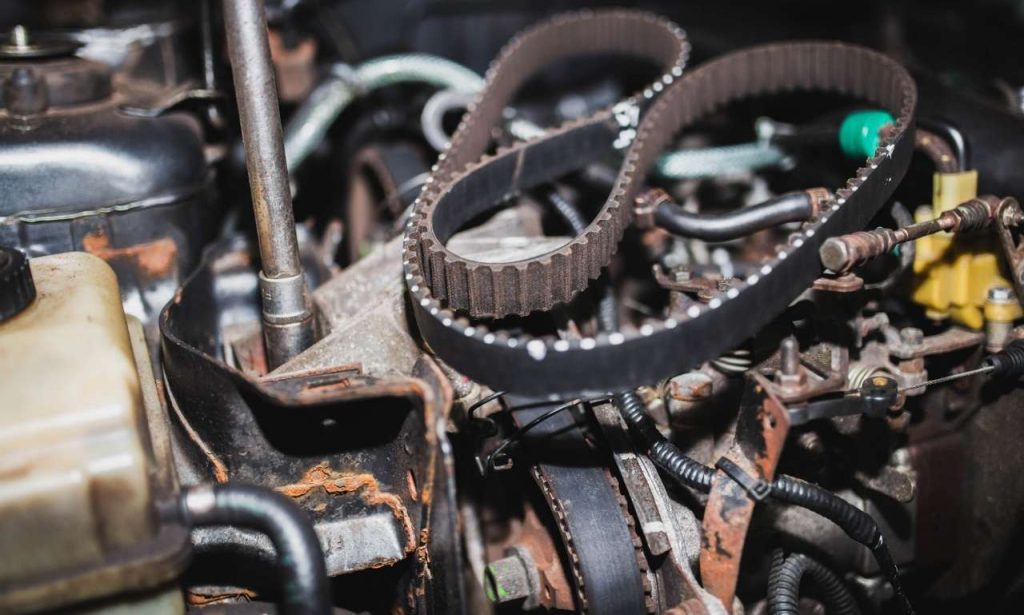
You don’t always need a mechanic to spot a timing belt problem. Sometimes a visual inspection tells you everything. If your car has an inspection window on the timing cover, look inside. What you see can reveal a lot about the belt’s condition.
A healthy timing belt looks smooth and solid. The teeth on the belt should be clean, evenly spaced, and fully intact. If you see fraying along the edges, that’s a red flag. Frayed edges mean the belt has been under too much stress.
Glazing is another thing to look for. A glazed belt looks shiny or glassy on the surface. That shine means the rubber has hardened. Hard rubber loses flexibility and grip, which leads to slipping.
Check for missing or damaged teeth too. The teeth keep the belt locked with the gears. Missing teeth cause timing slippage almost instantly. If you see any of these signs, replace the belt right away.
Loss of Voltage
Loss of voltage might seem unrelated to a timing belt. But there’s a direct connection worth understanding. Many vehicles use the timing belt to drive the alternator or other accessory components. When the belt weakens, it can affect how these systems operate.
A slipping or loose timing belt reduces the efficiency of connected components. The alternator may not spin fast enough to charge the battery. As a result, your car’s electrical system starts showing problems.
You might notice dim headlights or a battery warning light on the dashboard. Electronics may behave erratically. The car might stall unexpectedly. These symptoms overlap with other electrical issues, which makes diagnosis tricky.
If you’re experiencing electrical issues alongside other symptoms on this list, don’t guess. Get a full inspection done. A professional can confirm whether the timing belt is affecting your vehicle’s voltage output.
Ticking Noise From The Engine
A ticking or clicking noise from your engine is never a good sign. When the timing belt starts to wear, it can create a distinct ticking sound. This noise comes from the belt moving improperly over the pulleys and gears.
Low oil pressure can also cause ticking. However, if the noise increases with engine speed, the timing belt is more likely the cause. The faster the engine spins, the louder the ticking becomes.
The ticking can also come from worn timing belt tensioners. These tensioners keep the belt tight and properly aligned. When they fail, the belt can slap against the timing cover, creating noise.
Never dismiss engine ticking as something minor. Many drivers live with that sound for months before the belt finally breaks. By then, the damage is already done. Act quickly when you hear unusual engine noises.
Visible Wear Or Cracks
Physical cracks on the timing belt are a serious warning. Rubber deteriorates over time due to heat, age, and friction. As it ages, small cracks begin forming along the belt’s surface. These cracks weaken the belt’s structural integrity.
Even tiny cracks are worth taking seriously. A belt with surface cracks is much closer to snapping than one without. Heat makes cracks spread faster. In hot climates, belts can deteriorate quicker than manufacturers anticipate.
Cracks often appear on the underside of the belt, between the teeth. This area bends the most during operation. Inspecting this part requires removing the timing cover, so it’s best left to a mechanic.
Don’t wait for cracks to become breaks. If your belt is past 60,000 miles and hasn’t been inspected, schedule a check today. A small inspection fee is far cheaper than a bent valve or damaged piston.
Oil Leaks Near The Timing Belt Cover
Oil leaking near the timing belt cover is a sign worth investigating. Seals around the camshaft and crankshaft can wear out over time. When they fail, oil seeps into the timing belt area. Oil-soaked belts deteriorate much faster than dry ones.
Oil weakens the rubber compound in the belt. A contaminated belt loses grip and flexibility quickly. It becomes far more prone to slipping or snapping. This dramatically shortens the belt’s remaining life.
You might notice a greasy residue around the timing cover or underneath your car. The oil can also mix with dust and dirt, forming a dark sludge. That sludge is often visible when you open the hood.
If you spot an oil leak near the timing area, don’t delay. Have a mechanic fix the seal and inspect the belt. Often, both need replacing at the same time.
Conclusion
Your timing belt works hard every single time you start your car. It keeps everything running in perfect rhythm. When it starts failing, your engine pays the price. The warning signs are real and worth paying attention to.
Engine misfires, smoke, ticking noises, and oil leaks all point to potential belt problems. Visible cracks or worn belt appearance confirm the issue. Difficulty starting and voltage loss are equally serious signs. None of these symptoms should be dismissed.
Most importantly, follow your manufacturer’s recommended replacement schedule. Don’t wait for a breakdown to act. Proactive maintenance always costs less than emergency repairs. Check your belt, protect your engine, and drive with confidence.
Also Read: Why Driving With a Bad Transmission Is a Bad Idea
FAQs
Most manufacturers recommend replacing the timing belt every 60,000 to 100,000 miles. Always check your vehicle’s owner manual for the exact interval.
The engine stops immediately. In interference engines, broken belts often cause severe internal damage, including bent valves or damaged pistons.
Driving with a worn or damaged timing belt is risky. It can snap without warning, causing sudden engine failure and costly damage.
Replacement typically costs between $300 and $1,000, depending on your vehicle make, model, and labor rates in your area.