A strange noise can dominate an entire commute and then vanish the moment the car reaches a repair shop. The engine suddenly idles smoothly, the warning light goes out, or the vibration that seemed impossible to ignore refuses to appear during the technician’s road test. Intermittent faults are among the more frustrating automotive problems because many components behave differently as temperature, electrical load, road conditions, and vehicle movement change. A disappearing symptom does not necessarily mean the underlying car problem has repaired itself; it may simply be waiting for the right conditions to return.
Intermittent Problems Depend on Specific Conditions

Many mechanical failures eventually become constant, but they do not always begin that way.
A component can operate correctly under one set of conditions and malfunction under another. Temperature, engine speed, vehicle speed, moisture, vibration, electrical demand, steering angle, braking force, and fuel level can all influence symptoms.
That makes timing important.
A driver may hear a noise only during the first five minutes after a cold start. By the time the vehicle reaches a workshop, the engine and drivetrain are warm and the sound has disappeared.
Another fault might appear only after an hour of highway driving.
If the mechanic tests the vehicle for ten minutes around town, the conditions needed to reproduce it never occur.
The symptom is real, but the diagnostic window is narrow.
Temperature Can Transform Mechanical Behavior
Cars operate across a surprisingly wide temperature range.
Metal expands as it heats. Lubricants become thinner. Rubber components change flexibility. Electrical resistance can shift, while cooling systems regulate temperatures across different components.
These changes can expose or conceal problems.
An exhaust component may rattle when cold but become quieter after thermal expansion. A worn bearing can behave differently once its lubricant warms. A sensor or electronic module may function correctly at one temperature and fail at another.
Cold-start problems are particularly easy to miss at a repair shop if the customer drives there first.
The vehicle may need to sit for several hours before the technician can reproduce the original conditions.
This is why details such as “only on the first start each morning” can be far more diagnostically useful than simply reporting that the engine makes a strange sound.
Why Car Problems Disappear When Warning Lights Turn Off
Modern vehicles constantly monitor numerous systems through onboard diagnostics.
When the computer detects certain abnormalities, it can store diagnostic trouble codes and illuminate a warning light. If the problem is no longer detected during subsequent driving, the light may eventually switch off.
That does not necessarily erase all evidence.
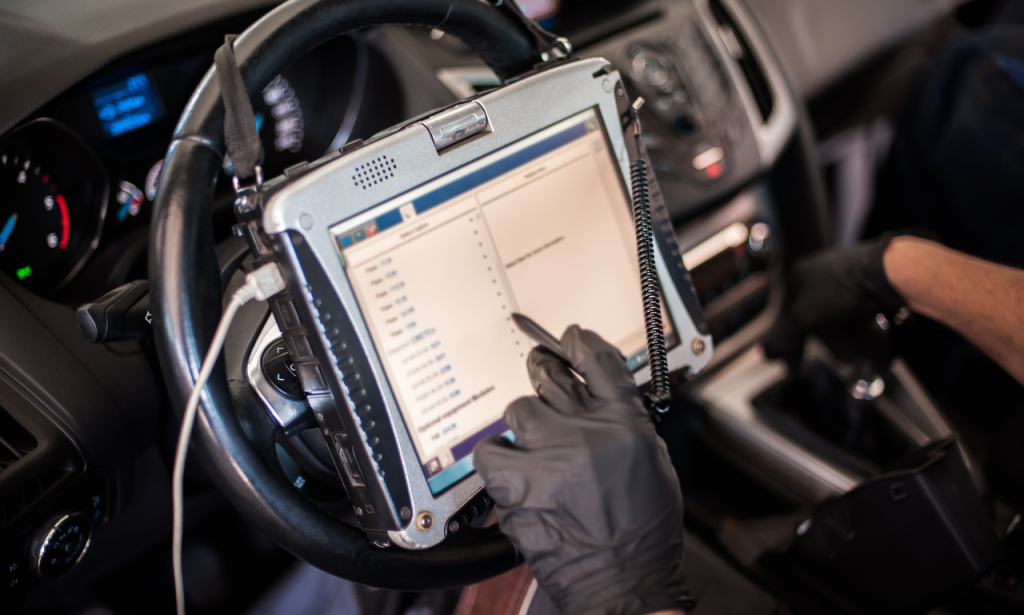
Stored or pending diagnostic codes may remain available for a technician to retrieve with appropriate equipment. Freeze-frame data can sometimes record operating conditions from around the time a fault was detected.
This information can be extremely valuable when the vehicle behaves normally during inspection.
Drivers should therefore avoid assuming that a vanished warning light means there is nothing left to diagnose.
Likewise, clearing codes immediately before visiting a mechanic can remove useful clues and make an intermittent fault harder to investigate.
Loose Electrical Connections Can Work Again Temporarily
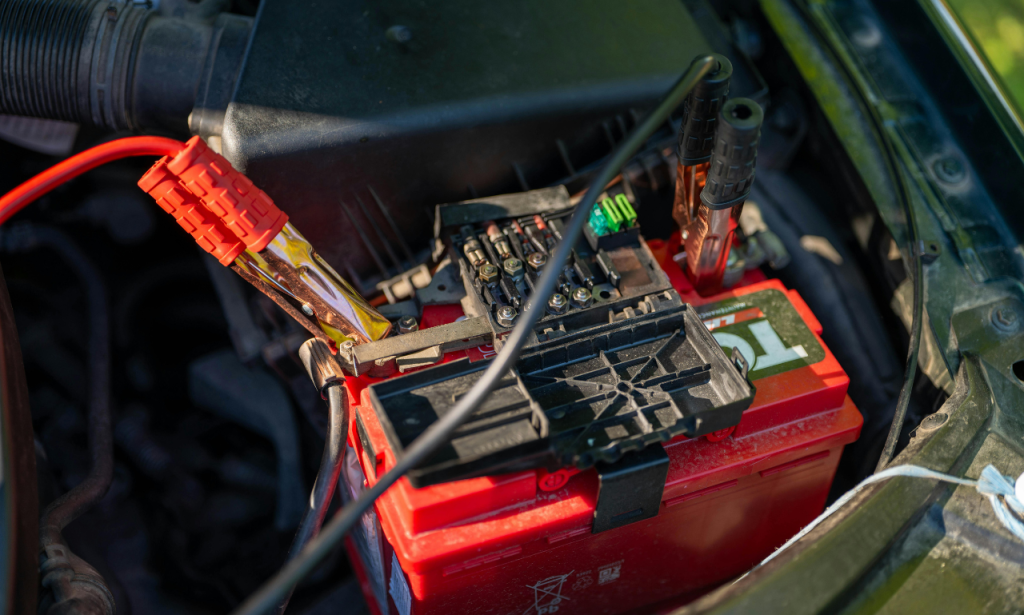
Vehicles increasingly depend on electronics, from engine management and safety systems to entertainment and comfort features.
Electrical connections are exposed to heat, vibration, moisture, and years of movement.
A loose terminal, damaged wire, corroded connector, or poor ground can create intermittent contact. A bump in the road may break the connection temporarily. Another vibration may restore it.
The result can seem almost random.
A dashboard warning appears and disappears. A power window stops working, then operates normally. The engine hesitates once but behaves perfectly afterward.
Electrical diagnosis can be difficult when the circuit is functioning at the moment it is tested.
Technicians may need to inspect wiring carefully, monitor live data, perform voltage-drop tests, or manipulate suspect harnesses while watching for changes.
Replacing components simply because they are associated with the affected system can become expensive without proving the actual fault.
Vibration Can Both Cause and Hide Symptoms
A moving car experiences constant vibration.
Engines rotate, suspension components respond to the road, wheels encounter imperfections, and the body flexes slightly as the vehicle moves.
Loose or worn components can react differently depending on these forces.
A heat shield might rattle at a narrow engine-speed range. A worn suspension joint may make noise only when a particular wheel encounters a sharp bump. Interior trim can buzz on coarse pavement but remain silent on smooth roads.
By the time a technician drives the vehicle, the road surface or speed may be different.
Some vibration-related problems are also sensitive to load. A noise heard while accelerating uphill may disappear during gentle acceleration on level ground.
Reproducing the exact situation is therefore often central to diagnosis.
Moisture Can Create Temporary Electrical Faults
Weather can dramatically influence certain automotive problems.
Water can enter damaged connectors, wiring, ignition components, lamps, sensors, or electronic modules. High humidity can also expose weaknesses in insulation or electrical connections.
A car may misbehave after heavy rain and operate normally once everything dries.
That creates a difficult situation if the vehicle reaches the shop on a warm, dry afternoon.
Moisture-related faults are not limited to electronics. Water can influence belt noises, brake behavior, and other components temporarily.
Drivers should mention weather conditions when symptoms appear.
“Only after rain” or “usually after washing the car” provides a technician with a much stronger clue than a general report that the problem happens occasionally.
Repeated moisture-related faults deserve investigation because corrosion and water intrusion can worsen with time.
Driving Style Can Determine Whether the Fault Appears
A technician may not drive the car exactly as its owner does.
That difference matters.
A hesitation might occur only during hard acceleration. A transmission shudder may appear during light throttle at a particular speed. A steering noise could require nearly full steering lock.
If the mechanic’s road test never reproduces those conditions, the vehicle may appear normal.
This is not necessarily evidence that either person is mistaken.
Different drivers use different acceleration rates, braking pressures, routes, speeds, and steering inputs.
A precise description helps bridge that gap.
Instead of saying “the transmission sometimes acts strange,” it is more useful to report that the car shudders while gently accelerating between two particular speeds after it has warmed up.
The narrower the conditions, the easier they are to reproduce deliberately.
Fuel Level Can Influence Certain Problems
Some symptoms correlate with how much fuel is in the tank.
Fuel-pump operation, tank ventilation, contaminated fuel, or certain evaporative-emissions faults can behave differently depending on fuel level and operating conditions.
A driver might notice hesitation when the tank is low but arrive at the workshop after filling it.
The relevant condition has disappeared.
Fuel quality can create similar confusion.
A vehicle may run poorly after one fill-up and improve after additional fuel is added or consumed. That does not automatically prove contamination, but the timing is useful information.
Keeping track of where fuel was purchased, approximately how much was in the tank, and when symptoms began can provide clues.
Patterns that initially look random often become more understandable once operating conditions are documented.
Engine Load Changes What Components Experience
A car does not place the same demand on its engine during every journey.
Cruising on a flat road requires relatively little power. Climbing a steep hill, towing, accelerating onto a highway, or carrying a heavy load requires much more.
Certain faults become visible only under those higher demands.
Weak ignition components, fuel-delivery problems, cooling-system weaknesses, turbocharger issues, and transmission faults can remain hidden during gentle driving.
The car may idle perfectly in the workshop.
That does not prove it will behave normally during a long climb with the air conditioning running.
Technicians sometimes need road tests, scan-tool monitoring, or controlled diagnostic procedures that place the system under appropriate load.
The operating environment must match the complaint closely enough for the fault to reveal itself.
Brakes Can Make Noises Only Under Particular Conditions
Brake complaints can be highly intermittent.
Temperature, moisture, pad material, rotor condition, braking pressure, and vehicle speed all influence noise and vibration.
Some brakes make noise during the first few stops after the vehicle has been parked overnight, particularly when surface moisture or light corrosion is present. The sound can disappear once repeated braking cleans and warms the surfaces.
Other problems become noticeable only after the brakes are hot.
A driver arriving at a shop may therefore present a completely quiet braking system.
Not every temporary brake noise indicates a serious defect, but braking is safety-critical. Persistent grinding, pulling, reduced braking performance, warning lights, or unusual pedal behavior warrants prompt attention.
The fact that a noise has stopped does not automatically establish that the brakes are healthy.
Suspension Noises Depend Heavily on the Road
A worn suspension component can remain silent on smooth pavement.
Drive across broken asphalt, speed bumps, potholes, or an angled driveway, and the noise suddenly appears.
Different suspension components respond to different types of movement.
A problem may require one wheel to move independently, both wheels to compress together, the steering to turn, or the suspension to reach a particular position.
A workshop located beside smooth roads may struggle to reproduce a complaint that happens every day on the driver’s rough commute.
Knowing the exact type of surface that triggers the symptom can help.
In some cases, a technician may inspect joints, bushings, mounts, shocks, springs, and fasteners even when the sound cannot be reproduced.
Physical wear can provide evidence that the road test does not.
Software and Electronic Control Can Reset Behavior
Modern cars are computers as much as mechanical machines.
Control modules continuously adapt to sensor inputs and operating conditions. Some systems can temporarily enter reduced-performance modes when faults occur and return closer to normal operation when conditions change.
Turning the vehicle off and restarting it can sometimes make a symptom disappear temporarily.
That does not mean restarting repaired the cause.
A fault may recur once the system detects the same abnormal condition again.
Software glitches can occasionally play a role as well, although they should not become a catch-all explanation for every unexplained problem.
Manufacturers sometimes release software updates or technical service information addressing known behaviors.
Accurate fault codes, vehicle history, and symptom conditions help determine whether the issue is electronic, mechanical, or a combination of both.
A Phone Recording Can Be Surprisingly Useful
A mechanic cannot diagnose every problem from a video, but recordings can preserve information that disappears before the inspection.
A driver can safely record unusual sounds while the vehicle is stationary or have a passenger capture symptoms while the car is moving.
The recording may reveal whether a sound is a squeal, knock, rattle, click, or grinding noise.
Dashboard photos are useful too.
If several warning messages appear and disappear, photographing them can preserve their exact wording.
The same applies to instrument readings such as temperature or RPM when it is safe to observe them.
Documentation reduces reliance on memory, particularly when the symptom is stressful.
Safety comes first, however. Drivers should never attempt to film, photograph, or type notes while actively controlling a moving vehicle.
A Symptom Log Can Reveal the Pattern
Intermittent faults often stop looking random once enough observations are collected.
A simple record can include the date, outside temperature, engine temperature, vehicle speed, approximate RPM, fuel level, weather, road conditions, and what the driver was doing when the problem occurred.
It is also useful to note how long the vehicle had been running.
Patterns may emerge quickly.
Perhaps the engine hesitation always occurs after 30 minutes of driving. Maybe the vibration appears only between 50 and 60 mph. A warning could consistently follow heavy rain.
This information can dramatically narrow diagnostic possibilities.
It also prevents the driver’s description from becoming overly general after weeks of frustration.
“Sometimes it makes a noise” offers little direction. “It rattles for about 20 seconds after the first cold start below 10°C” gives the technician a condition to reproduce.
Parts Should Not Be Replaced Merely Because the Problem Is Intermittent
Intermittent faults can encourage guesswork.
A component seems plausible, so it gets replaced. When the problem returns, another part is tried.
This approach can become expensive.
Several systems can produce similar symptoms, particularly with electrical and drivability problems. A hesitation might involve ignition, fuel delivery, airflow measurement, transmission behavior, or another issue entirely.
Good diagnosis aims to gather evidence before condemning a component.
That may require scanning modules, examining live data, testing circuits, checking mechanical condition, or waiting until the fault can be reproduced.
Sometimes diagnosis takes longer than the repair itself.
The absence of an immediate answer does not necessarily mean the workshop lacks expertise. Intermittent faults are difficult precisely because technicians often have to identify a failure that is not currently happening.
Some Problems Become Easier to Diagnose as They Worsen
An intermittent failure can eventually become more consistent.
A deteriorating electrical connection may fail more frequently. A bearing can become noisier. A weak sensor may move farther outside its normal range.
From a diagnostic perspective, consistency can make the cause easier to identify.
That does not mean waiting for the problem to worsen is always sensible.
Safety-related symptoms involving brakes, steering, tires, overheating, fuel leaks, severe electrical faults, or loss of engine power may require immediate attention.
The appropriate response depends on the symptom and potential consequences.
For minor non-safety complaints, a technician may sometimes recommend monitoring the vehicle until more diagnostic evidence appears rather than replacing expensive components based on speculation.
That is different from ignoring the problem.
Warning Signs Should Not Be Dismissed Because They Vanish
Some intermittent symptoms deserve urgent attention even when the car currently feels normal.
An oil-pressure warning, overheating indication, brake-system warning, severe steering problem, sudden loss of power, fuel smell, smoke, or rapidly changing handling can signal conditions capable of causing damage or creating safety risks.
A flashing check-engine light can also indicate a severe misfire that may damage the catalytic converter.
Drivers should consult the vehicle’s manual for the meaning of specific warnings and respond appropriately.
The crucial principle is simple: symptom disappearance and fault resolution are not the same thing.
A vehicle can temporarily return to normal operation while the condition responsible for the warning remains present.
Conclusion
Cars operate under constantly changing conditions, so faults do not always present themselves on demand. Temperature shifts, vibration, electrical contact, moisture, road surfaces, engine load, and control-system behavior can turn a problem on during one journey and off during the next.
That variability explains why some car problems disappear before a mechanic checks them. The most useful evidence may therefore come from what happened before the vehicle reached the workshop: when the symptom occurred, what the car was doing, how warm it was, what warning appeared, and what conditions caused the problem to stop.
A disappearing fault should encourage better observation rather than automatic reassurance or immediate parts replacement. Recordings, stored diagnostic codes, detailed symptom notes, and carefully reproduced driving conditions can turn an elusive complaint into a recognizable pattern. Once that pattern is visible, diagnosis becomes far less dependent on whether the car happens to misbehave during its brief appointment.
Also Read: Why Does Coolant Disappear Without Visible Leaks?
FAQs
Yes. Stored fault codes, inspection findings, live data, recordings, and a detailed description of the conditions can still provide useful evidence.
Generally, no. Clearing codes can remove diagnostic information that may help identify an intermittent fault.
Restarting can reset certain electronic states temporarily, but it does not necessarily correct the underlying mechanical or electrical cause.
Some are minor, while others can involve safety-critical systems. Warning lights, overheating, braking problems, severe power loss, or steering changes deserve prompt attention.